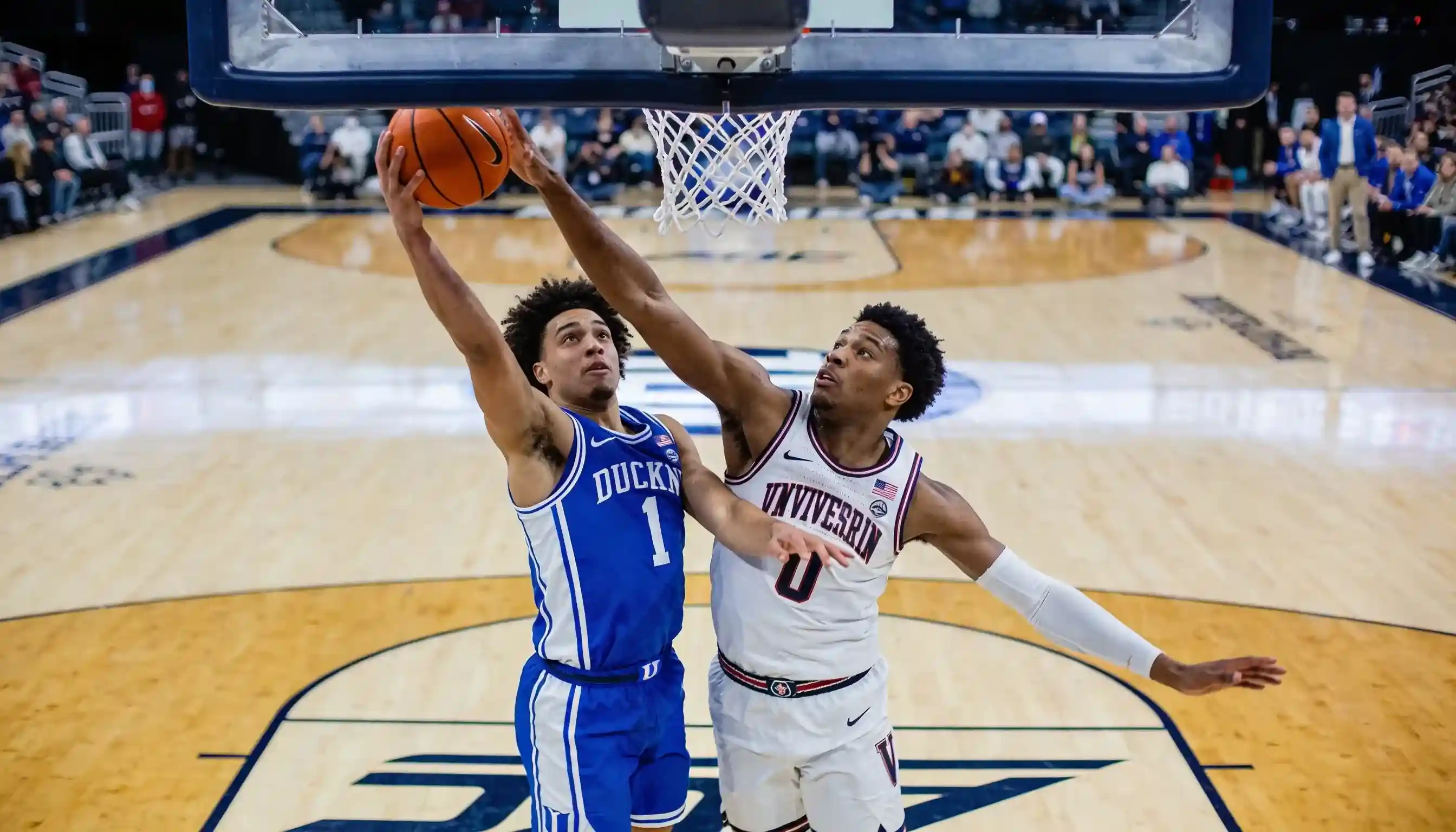
March Madness Betting Analytics: Bracket and Game-By-Game Data
 Available in US

The first round of the NCAA Tournament is the most chaotic 48 hours of the basketball year, and I love it. I also lose money during it more often than I would like to admit, because the variance is structurally enormous and even the best analytical work gets bent by single-elimination format. The trick is to know which markets to attack and which to leave to the casuals.
From a UK punter’s perspective, March Madness is an annual event that you do not get many opportunities to play. Eleven months of preparation and one three-week sprint. This guide is the version of my notes I wish I had been given before my first tournament, with the lessons of a decade of bracket-driven mistakes baked in.
Evaluating Seeding Trends and Tournament Elimination Structures
The NCAA Tournament is 68 teams reduced to one champion across three weeks. The First Four games (four play-in games for the lowest seeds) happen on Tuesday and Wednesday of week one, then the Round of 64 plays Thursday and Friday, with 16 games on each of those two days. The Round of 32 splits over Saturday and Sunday. Sweet Sixteen and Elite Eight play the second weekend, the Final Four plays the following Saturday, and the National Championship caps it off on Monday night.
The structural quirks that punters miss are around the venue and the rest patterns. Games are played at neutral venues throughout, with the second-weekend regional sites already announced months in advance. Teams play their first two games at the same site, then move to a different city for the Sweet Sixteen. The rest pattern between rounds is uneven – first to second round is one day off, second round to Sweet Sixteen is four-to-five days off, then back to one day off between the Sweet Sixteen and Elite Eight. The variation in rest patterns produces betting angles that matter, particularly in the Sweet Sixteen where teams have had time to scout opponents in unusual depth.
The seeding distribution is the other thing worth knowing. The committee seeds 1 through 16 in each of four regions, with the bracket designed so that the highest seeds meet the lowest seeds in early rounds. That makes the first round predictable in expectation and chaotic in reality – 12 seeds beat 5 seeds with surprising regularity, and 8/9 games are essentially coin flips by design. The market knows this, but the lines on specific matchups still leave room for analytical work because the seeding is committee-driven rather than purely results-driven.
Bracket pools versus game-by-game betting
UK punters often arrive at March Madness through bracket pools, which are essentially fantasy-style competitions where you predict every game in advance and score points based on how many you got right. Bracket pools are not betting in the regulatory sense, and most UK-licensed sportsbooks do not offer them – they are typically run informally between friends or through office contests, though the legality of paid entry pools varies by jurisdiction. The skill in bracket pools is partly different from the skill in single-game betting because you are optimising across a portfolio of correlated picks rather than maximising EV on individual bets.
Game-by-game betting is what I do during the tournament, and it is what UK lobbies are set up for. Every game in the tournament gets full market coverage – moneyline, spread, totals, parlays, often live betting, and a deeper selection of player props than most regular-season games. The volume of games on first-round Thursday and Friday is intense, with 16 games each day spread across UK afternoon and evening, and the temptation to bet too many is the largest single risk new tournament punters face.
My approach is to pre-select the games I will bet before the tournament starts, based on analytical edges I have identified during the regular season. I aim for 8-12 bets across the first weekend, not 32. That selectivity is what separates a profitable tournament from a frantic one. The games I look hardest at are 11/6 and 12/5 matchups in the first round (the upset spots that look romantic), and Sweet Sixteen totals where the rest advantage favours under-betting. Before filling out your tournament bracket, make sure to review our comprehensive NCAA men’s basketball betting guide to spot mid-major value.
Seeding and historical trends that actually matter
The historical record on seeding upsets is well-documented and the market prices most of it accurately. 1 seeds beat 16 seeds the overwhelming majority of the time (with the famous exception that does happen occasionally), 2 seeds beat 15 seeds about 92-94% of the time, and 3 seeds beat 14 seeds about 85% of the time. The lines reflect these probabilities, sometimes with small shading on the favourite. The 4/13 matchup is where the data gets interesting – historically these are closer to 78-80% favourite wins, but the lines often imply higher win probabilities because the public assumes the higher seed is safe.
The 12/5 trend has been the most famous upset spot for decades. Twelve seeds win that game roughly 33-37% of the time historically, against an implied probability that has typically sat around 30-35%. The market has narrowed this gap as the trend became famous, but small edges still appear when the specific 12 seed has the right characteristics – a senior-laden roster, strong three-point shooting, and a defensive style that creates turnovers.
The single most underrated bracket position is the 10 seed in the Round of 64. Ten seeds win roughly 39-41% of their first-round games against 7 seeds, and the lines historically have undervalued this matchup. The 10 seed is typically a major-conference team that finished in the middle of its league and got into the tournament on bubble strength; the 7 seed is often a mid-major champion or a power-conference team that flatlined down the stretch. Style matchups matter more than seed differential in this spot.
The Sweet Sixteen has its own distinct pattern. The four-to-five days off between weekends matters because coaching staffs use it to scout in unusual depth, and that disproportionately benefits the better-coached team. Programmes with established veteran coaching staffs (Duke, Kansas, Villanova, Michigan State historically) overperform their seed in the Sweet Sixteen more reliably than they do in the Round of 64. The line does not always credit coaching depth enough, particularly when the higher seed has a younger coach.
Final Four betting and the championship weekend
The Final Four arrives with the entire betting world watching. Mobile betting accounted for 78% of all online sports bets placed globally in 2024, and the Final Four weekend is one of the highest mobile-traffic events on the US calendar. UK punters benefit from the lines being sharper than the rest of the tournament – the casual public bets the Final Four heavily, which means the lines reflect that money rather than analytical projections alone.
The two semi-finals are played at the same neutral venue on Saturday, with the championship game on Monday. The rest pattern is generous – both finalists have at least one day off, often two. That has direct implications for pace and shooting accuracy, both of which trend higher than they did in earlier rounds. Totals at the Final Four sit higher than the same teams’ regular-season averages would suggest, and the public correctly bets the over in most cases. The contrarian play is fading totals when both teams are veteran-led and grind-style, where the lines have been pushed up by the general “Final Four totals go over” narrative.
The championship game itself is a unique pricing environment. The two teams have had a day off, the matchup has been analysed by every analyst with a media platform, and the public has had 48 hours to form opinions. Lines move sharply between Saturday night and Monday tip-off, often by half a point or more on the spread and by a full point on the total. The closing lines are tight, and pre-game edges are rare.
For the bigger picture of how the basketball calendar pivots after college basketball concludes, the main NBA guide covers the NBA Finals window that takes over the betting world in late May and June, just as March’s college frenzy is fading from memory. The two events bookend the spring as the most heavily bet basketball weeks of the year, and the punters who plan for both rather than just one tend to do better across the spring as a whole. Master every aspect of college and professional hoops with our trusted basketball betting portal.
What I tell first-time tournament punters
The single most useful piece of advice for a UK punter doing March Madness for the first time is this: variance is so high that one weekend’s results tell you almost nothing about whether your process is correct. I have had first weekends where I went 11-1 and felt invincible, then turned around and went 3-9 the following year with the same approach. Single-elimination basketball is brutal on edges that depend on sample sizes, and the right way to evaluate your tournament betting is over multiple years, not multiple games.
Allocate smaller stakes than your regular-season norm. Pre-select your games. Resist the urge to bet everything just because everything is on television. The tournament rewards discipline more than knowledge, and the punters who treat it as a marathon rather than a sprint are the ones who come out positive across the long run.
Are bracket pools legal at UK sportsbooks in 2026?
Most UK-licensed sportsbooks do not offer paid bracket pools, which sit in a regulatory grey area as competitions rather than betting markets. Informal pools between friends are common but vary in legality depending on stake structure. Standard March Madness game-by-game betting is fully available at UK lobbies and is the cleaner regulatory product.
How does Selection Sunday move spreads in the next 48 hours?
Selection Sunday is when the bracket is announced, and the first wave of lines for the Round of 64 posts within hours of the announcement. Sharp money arrives quickly, particularly on the 11/6 and 12/5 upset spots where the analytical community has views. By Monday morning UK time the lines have usually moved one or two points on the higher-profile games, with first-weekend trapdoors absorbing most of the pre-tournament action.
Prepared by the Basketball Betting Explained editorial staff.