
WNBA Betting Systems: Core Markets and Prop ROI Patterns
 Available in US
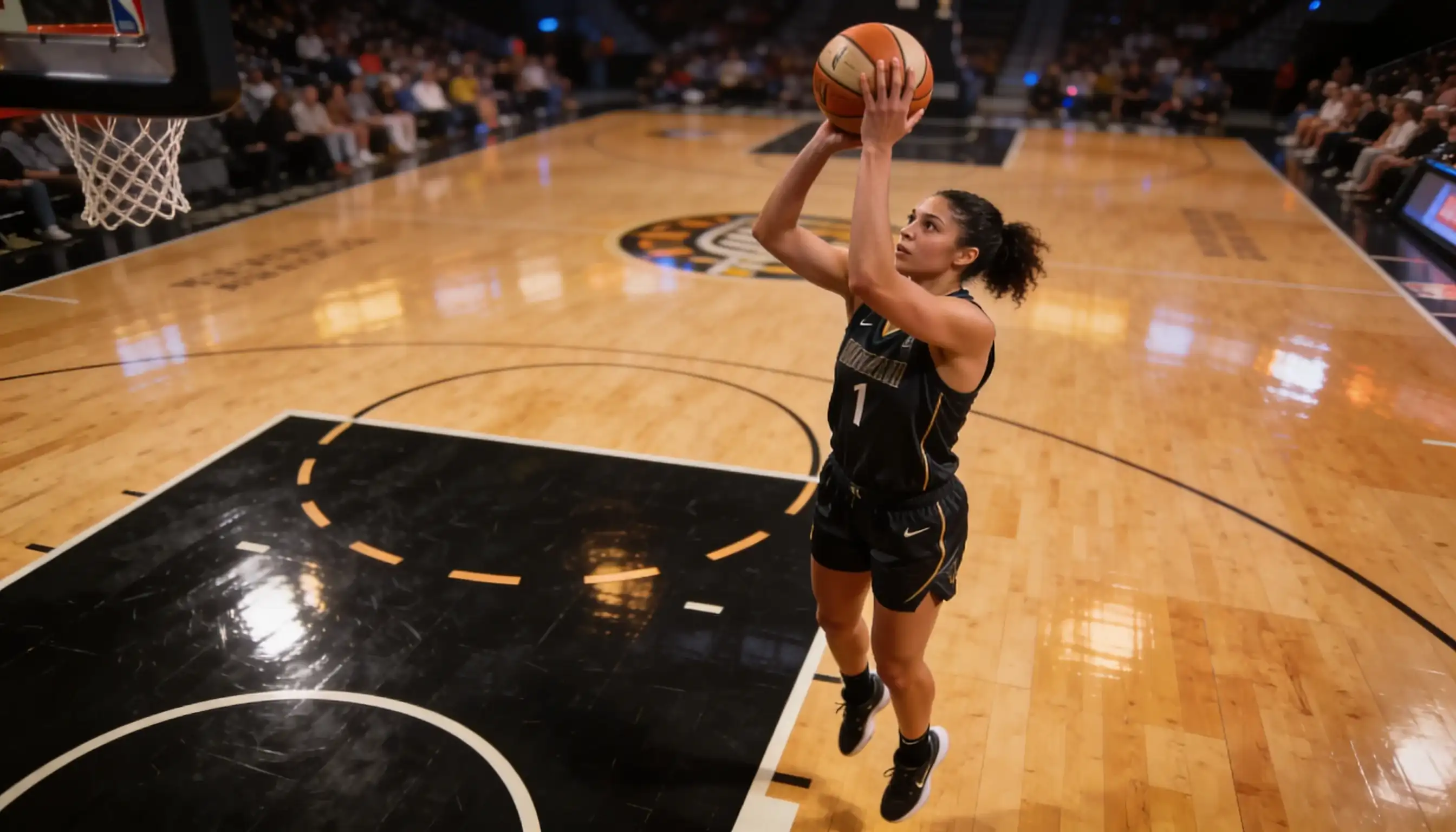
I started taking WNBA betting seriously in 2023, mostly because the lines had not caught up to the league’s growth and the prop markets were soft enough that anyone with a Caitlin Clark search engine bookmark could find an edge. The market is much sharper in 2026, but it is still measurably softer than NBA, and the summer-fall calendar fills the gap between the NBA Finals and the start of the next regular season in a way nothing else does. BetMGM reported a 108% year-on-year increase in WNBA betting activity in the 2024 season, and the trajectory has continued upward – though the volume is still small enough that pricing inefficiencies persist.
This is the working guide I would give to any UK punter looking at the WNBA for the first time, plus the strategy differences from NBA betting that genuinely matter at the line.
Market Liquidity and Structural Dynamics of the WNBA Season
The growth numbers around women’s basketball betting are remarkable enough that they are worth sitting with. US bettors wagered approximately $2.72 billion on women’s national tournaments in 2024, and the combined WNBA and NCAAW handle has jumped roughly 600% since the 2022-23 cycle. DraftKings reported a 14× handle increase on women’s college basketball over the same window. From a UK perspective, that growth has dragged book attention with it – UK lobbies now list deeper menus of WNBA markets than they did three seasons ago, including props that were unavailable as recently as 2023.
The market remains structurally different from NBA, and the structure matters. WNBA betting handle is still a small fraction of NBA handle even after 600% growth, which means books invest less analytical labour in pricing the lines. The traders are real and they are competent, but the line-setting process leans more heavily on simple inputs (recent form, season averages, public sentiment) than it does on the deep modelling that backs NBA totals and spreads. That gap is where edges remain, particularly on prop markets and on early-season games before the trader has full reads on rotation and minutes patterns.
The other structural reality is that the WNBA season runs from May through October, with the playoffs concluding in early autumn. From a UK desk, this means WNBA games are predominantly evening-into-night fixtures during the European summer, with tip-offs roughly between midnight and 4am GMT depending on the market the home team plays in. The schedule is friendlier than NBA for some punters and worse for others; I personally find it works well as a summer hobby market when football is on its preseason break and NBA is in its dead months.
WNBA season structure and the betting calendar
The 2026 regular season is 40 games per team, played from mid-May through mid-September. That is half the length of an NBA regular season, which has direct implications for sample sizes when you are evaluating teams. By the time the All-Star break arrives in July, every team has played roughly 20 games. By the playoffs, the regular season has produced significantly less data than the equivalent NBA stretch, which means individual game results carry more analytical weight and momentum effects last longer.
The Commissioner’s Cup is a mid-season tournament that runs alongside the regular season, similar in concept to the NBA Cup though structured differently. Designated regular-season games count for Cup standings, the winners of each conference advance to a single championship game in late June, and that game is the only standalone fixture on the calendar. Betting markets on the Cup are thin – most UK lobbies do not offer Cup-specific futures – but the designated games sometimes see soft pricing because the casual punter does not realise the matchup carries extra stakes.
Playoffs are a single-elimination first round followed by best-of-five series in the semi-finals and best-of-seven in the finals. That format produces high-variance early rounds and more predictable late rounds, the opposite pattern from the NBA where the first round is the most predictable. The variance affects both series prices and game-line pricing – first-round upsets are more common than in NBA, and the lines often do not price the upset probability correctly.
Core WNBA markets in UK lobbies
The standard four markets – moneyline, spread, totals, parlays – are available on every WNBA game at every UK-licensed sportsbook that lists the league. Spreads run smaller than NBA on average (most games fall in a 5-to-10 point spread range, compared to NBA’s 4-to-12 range), and totals are noticeably lower (typical range 155-175, against NBA’s 215-235). The lower totals reflect both the shorter game (40 minutes regulation, against NBA’s 48) and slightly lower pace.
Player props are where the market depth has changed most dramatically. Three years ago, UK lobbies listed props only on the top three or four scorers in the league. In 2026, every starting player on most teams has at least points and rebounds lines available, with assists and threes added for the heavy-usage scorers. The lines are not always tight – minutes projections lean too heavily on season averages rather than recent rotation changes, which means a player coming back from injury into a higher-minutes role can be priced as if they are still on their pre-injury minutes baseline.
Outright futures markets are listed for championship winner, conference winners, MVP, and Rookie of the Year, with deeper props (player season averages, team season wins) available at some operators. Liquidity on these markets is thin enough that prices can move significantly on small bets, which cuts both ways – sometimes you can grab a soft price, sometimes you have to chase a moving target.
Live betting is fully available on most WNBA games at UK books, though the menu of in-play markets is narrower than for NBA. Game lines and totals reprice in real time; props and segment markets (quarter lines, half-time totals) are inconsistently supported depending on the operator. For UK punters wanting to pivot from off-season to mid-season men’s content, the NCAA basketball context provides the bridge into the autumn calendar, since NCAAW and WNBA playoffs overlap and college basketball begins its season as the WNBA wraps up.
Props and strategy differences from NBA
The strategic adjustment from NBA to WNBA is more substantive than most punters realise. The 40-minute game produces 40 minutes of scoring rather than 48, but that is not just a 5/6 multiplier on every projection – the rotation patterns are different, the foul-out rules produce different late-game dynamics, and three-point shooting volume is generally lower (which affects totals and props more than spreads).
The data point I always cite when discussing strategy differences is one of the more counterintuitive findings in recent betting research. A study by bookmaker 888 in New Jersey showed female customers achieved 19% ROI over 12 months versus male customers experiencing a 4.6% loss. The relevance to WNBA betting is that the demographic mix of WNBA bettors skews differently from NBA, and the betting patterns reflect that. The market is not yet dominated by the same recreational male majority that overweights home favourites and chases public narratives in NBA. That makes WNBA markets less susceptible to the standard sharp-vs-square dynamics, and it means contrarian strategies that work in NBA do not always transfer.
The specific WNBA props I have found softest are rebounds and assists for non-star starters. The market focuses heavily on the headline scorers (Wilson, Stewart, Clark, the elite tier), and the lines on second-tier rotation players are built more lazily from season averages. A starting forward whose minutes have ticked up over the past three games can have a rebounds prop set at a number that assumes their season-long minutes, which leaves systematic value on the over.
The other difference worth knowing is pace volatility. Individual WNBA games can swing widely in pace within a season – a team’s pace in their first ten games can differ meaningfully from their pace in their second ten games as rotations stabilise. NBA teams tend to settle into a pace identity by game 10 or so; WNBA teams sometimes do not lock in until game 20. That means using recent five-or-ten-game pace data is even more important in WNBA than in NBA, and using full-season pace can mislead you for half the season.
What I tell new WNBA punters
Treat WNBA betting as its own discipline rather than NBA-with-different-names. The game is different, the markets are softer, the schedule is friendlier from the UK in some windows and harder in others, and the strategic angles do not all transfer cleanly. Start with totals and spreads where the market structure is well-understood, build a feel for the rotation patterns and team paces, then layer in props once you have a clear view on which players are actually getting starter minutes. The growth trajectory means the market will keep tightening, so the soft pricing edges available today may not be there in three years. That is part of why the time to learn the league is now.
Are WNBA totals priced lower than men’s college basketball totals?
Generally yes. WNBA totals usually sit between 155 and 175 points, while men’s NCAA totals run from 130 to 160 for most games. The gap reflects pace and three-point volume differences as well as the WNBA’s 40-minute game length versus the 40-minute NCAA game with different shot-clock dynamics.
Why have UK sportsbooks added more WNBA markets in 2025-2026?
Handle growth has been substantial, the casual fanbase has expanded with star players generating mainstream attention, and operators see opportunity in a market that competes with NBA for summer betting attention. The expansion has been clearest on props, where most starters now have points and rebounds lines that did not exist three seasons ago.
Created by the ”Basketball Betting Explained” editorial team.