Live Basketball Betting Analytics: In-Play Trading and Cash-Outs
 Available in US

Live basketball betting is the format I spend the most time on and the one I would warn most casual punters away from. The decisions come fast, the prices move faster, and the difference between a disciplined live bettor and a tilted one is the difference between an edge and a slow leak. Live and in-play wagers represented approximately 47% of all sports bets placed globally in 2024, and that share keeps climbing – but volume alone does not make it the easy money the marketing implies.
What follows is the working playbook I use when I bet basketball live from a UK desk: how the game’s structure rewards in-play attention, what the momentum signals actually look like, which markets in UK lobbies are worth your time, and how to think about cash-out without lying to yourself.
Exploiting Scoring Runs and In-Play Momentum Swings
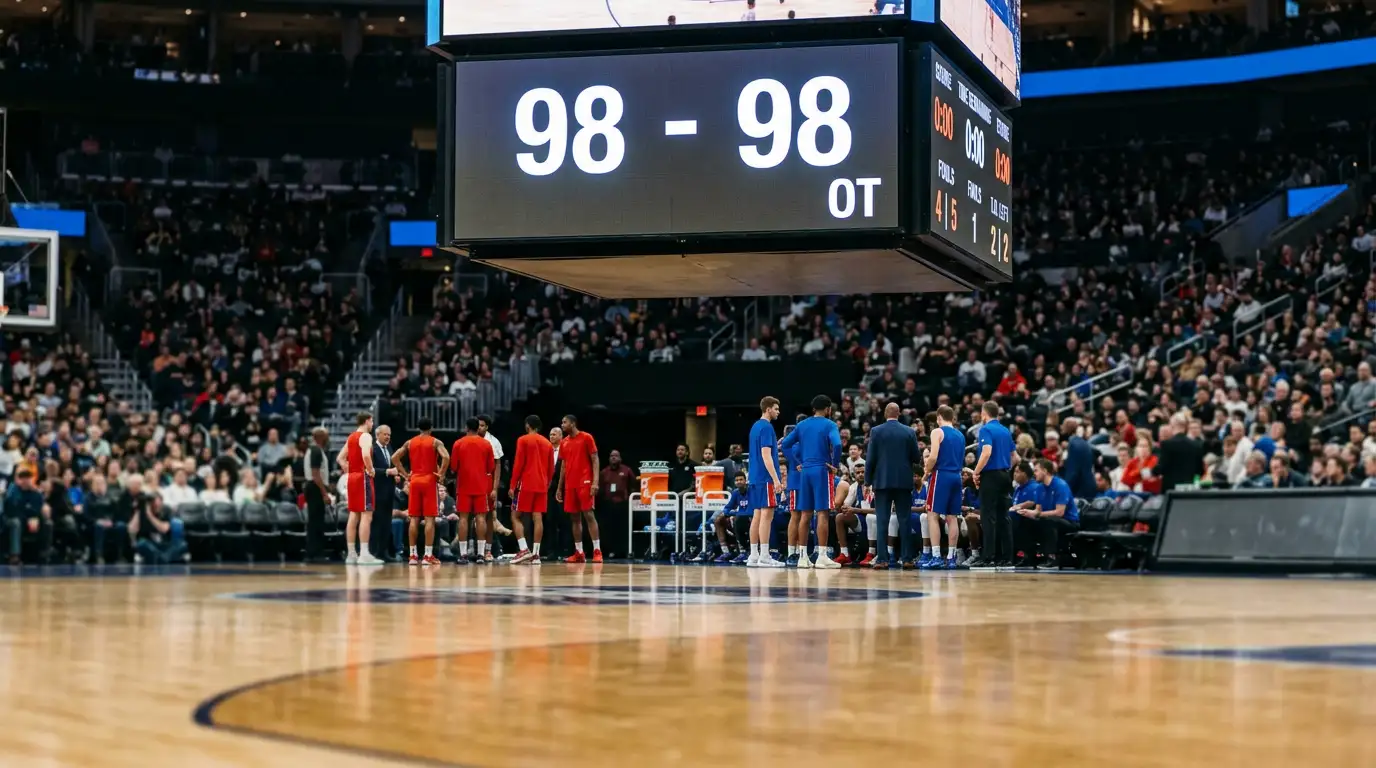
Some sports are well-suited to live betting and some are not. Football has long stretches without scoring; tennis has rigid point-by-point structure that books price tightly; horse racing barely happens in real time at all. Basketball sits in a sweet spot. Possessions resolve every fifteen to twenty seconds, scoring is continuous enough to produce frequent price movement, and the game has natural pauses (timeouts, end of quarters, free throws) that create reliable suspension windows where books reprice.
The structural fit is reflected in the numbers. Live wagers were 47% of global handle in 2024 and that share is projected to reach 75% in the US in 2025, with micro-betting expected to generate up to $3.3 billion in gross sportsbook wins. Basketball is consistently among the top three sports for live activity globally, behind football and ahead of American football by a meaningful margin. The structural advantages for in-play pricing are what underlie those numbers.
What that means for a UK punter is that the market is sharp on the obvious things. Live spreads and live totals adjust quickly to score changes, possession trends, and rotation movements. The edges are not in identifying that a team is playing well – that gets priced in instantly. The edges are in identifying things the live algorithm cannot see clearly, like specific player matchups, foul-trouble effects on rotations, and momentum patterns that emerge over five-minute windows rather than possession-to-possession.
Reading runs and momentum without lying to yourself
Momentum is a word that gets used too loosely in basketball. The version that matters for live betting is not “this team has scored eight in a row” – the live algorithm has already priced that. The version that matters is identifying when an apparent run is structurally fragile versus structurally durable.
A team going on an 8-0 run because their best three-point shooter has hit three open looks in a row is structurally fragile. The shots were open because the defence was rotating poorly, the defence will likely adjust, and the three-point shooter’s hot streak will regress. The live line, however, may shade toward that team meaningfully after the run, because the algorithm is partly trained on recent momentum as a predictive signal. That gap is where you bet against the run, taking the fading side at an inflated price.
A team going on an 8-0 run because their starting centre is dominating the paint against a smaller defender is structurally durable. The matchup advantage will persist as long as the centre stays on the floor. Betting against this run is a losing strategy on average, no matter how attractive the live price gets – until the centre picks up his third foul or the opposing coach makes a defensive substitution.
The skill in live basketball betting is distinguishing fragile runs from durable runs in real time, and acting on the fragile ones before the price corrects. That skill is not magic, but it does require watching the game closely enough to identify the actual cause of the scoring rather than just the result. Punters who bet live without watching the game are at a structural disadvantage; the live algorithm has scoreboard data and pace data, but it does not have the visual read of why the run is happening.
Foul trouble is one of the most predictable structural disruptors. When a starting player picks up his third foul in the first half, the coach almost always sits him for the remainder of the half. The lineup shift produces immediate downstream effects on offensive efficiency, defensive matchups, and rebound percentages. The live algorithm registers the substitution but does not always weight the cascading effects correctly. Watching for these foul-trouble moments and acting in the thirty-second window before the substitution settles is one of the cleanest live edges in basketball.
Live markets available in UK lobbies
UK lobbies offer a deep menu of live basketball markets. The standard four – live moneyline, live spread, live total, live parlay – are available on every televised game and most non-televised games. Beyond those, the typical menu includes quarter and half lines (current quarter spread, current half total), player props (next basket scorer, player to record a double-double, live points props), and team props (next team to score, time of next stoppage, race-to-X-points).
The structural reality of the UK market is that it is heavily mobile-driven. Roughly 78% of all online sports bets globally in 2024 were placed on mobile, and the UK is at the higher end of that range, particularly for live betting. That has implications for how UK lobbies design their live products – the menus are built for fast tap-through interactions rather than careful analytical workflows. The trade-off is that the markets are accessible but the analytical surface is shallow. If you want to dig into the underlying numbers behind a live line, you usually need a separate browser tab open.
Live props are where the depth varies most by operator. Some UK books list a deep menu of live player props that updates continuously through the game; others restrict live props to a few headline markets. The pricing on live props is generally softer than on live game lines, because the props market has lower volume and the trader has less labour to allocate per market. That softness creates opportunities, particularly on rebounds and assists props for players who are getting more minutes than the pre-match line anticipated.
The other category of live market worth knowing is the segment markets – bets on a specific quarter or half rather than the full game. These let you express short-horizon views without taking full-game variance. If you think the second quarter will be high-scoring because both teams’ bench units are weak defensively, the second-quarter total market lets you bet that thesis cleanly. The variance is lower than full-game totals and the analytical inputs are more focused.
Cash-out and the suspension question
Cash-out is the live betting feature that gets the most attention and produces the most confusion. The simple version: cash-out lets you settle a bet before the game finishes, at a price the bookmaker calculates based on the current game state. If you bet a pre-match spread and your team is winning comfortably at halftime, cash-out lets you take a fraction of your potential winnings now rather than risk the full bet on the second half.
Cash-out is rarely a positive-EV action in isolation. The price the bookmaker offers includes their margin, which means you are essentially paying juice to exit the bet. The mathematically optimal play, if your original analysis was sound and nothing has changed, is to let the bet ride. Cashing out reduces variance at the cost of expected value, which is a trade-off that can make sense in specific circumstances (bankroll protection, ending a session, managing exposure across multiple bets) but is not a generic edge.
The exception worth knowing is when the live information genuinely changes your view on the bet. If you bet a team’s spread before learning that their starting centre would be unexpectedly sidelined, cashing out before the line moves further against you can be the correct play. The condition is that your view of the bet has actually changed, not that you are simply uncomfortable holding it.
Market suspension is the other live feature that confuses new punters. UK books suspend markets at predictable moments – right before free throws, during long timeouts, after coach’s challenges, occasionally during reviews of basket counts. The suspension is a pricing protection for the bookmaker, not a malicious move against you. When the market reopens, prices may have shifted significantly, and any cash-out you were planning may no longer be available at the same number. Plan around suspension windows rather than fighting them.
For the next tier of live betting – the micro markets that have emerged as a substantial share of the in-play handle – the framework gets more granular. The micro markets explainer covers next-possession and next-basket markets that operate inside the standard live menu but with their own pricing logic and their own risk profile.
The live habits I actually keep
Live basketball betting works for me only when I am watching the game live. If I cannot watch the second half, I do not bet the second half live, regardless of how good the prices look. The information edge collapses without the visual feed, and live betting without watching is a recipe for chasing the algorithm in directions that look reasonable on the surface and lose money on average.
The other discipline is staking. Live bets should be smaller than pre-match bets, because the decision time is shorter and the variance from information asymmetry is higher. I size live bets at roughly two-thirds my pre-match unit, sometimes less. The smaller stakes also reduce the emotional pull of cash-out, which keeps the decision rational.
Live betting is not the easy money the marketing implies. It is a discipline that rewards focus and punishes distraction more harshly than pre-match betting does. Done well, it is one of the most reliable edges in basketball. Done casually, it is one of the most reliable losses.
Why are live basketball odds suspended right before a free throw?
Free throws are high-information moments – the outcome is binary and resolves in seconds, which means the bookmaker would face significant adverse selection risk if the market stayed open. Suspension protects the operator from punters reacting faster than the market can adjust. The same logic applies during coach’s challenges, reviews, and other moments where new information arrives in compressed time.
Should I cash out an in-play parlay when one leg has already won?
Generally no, unless your view on the remaining legs has changed materially. Cashing out a partially-won parlay locks in a portion of the potential winnings at the cost of expected value, since the cash-out price includes the operator’s margin. The cleaner play is to let the remaining legs settle if your original analysis still applies, and only cash out when something specific has shifted.
Published by the Basketball Betting Explained team.