
Overtime in Basketball Betting – Settlement Rules That Catch Out the Unaware
 Available in US
Table of Contents
- The Five Words That Cost Me an NBA Finals Bet
- The Full-Game Markets – Where the Convention Is Clear
- Quarter and Half Markets – The Real Settlement Trap
- Player Props and Their Overtime Conventions
- Live Markets and the Overtime Reset
- Money Lines, Draws and the Three-Way Markets
- Futures Markets and Overtime in Series Bets
- The Pre-Match Checklist That Saves Money
The Five Words That Cost Me an NBA Finals Bet
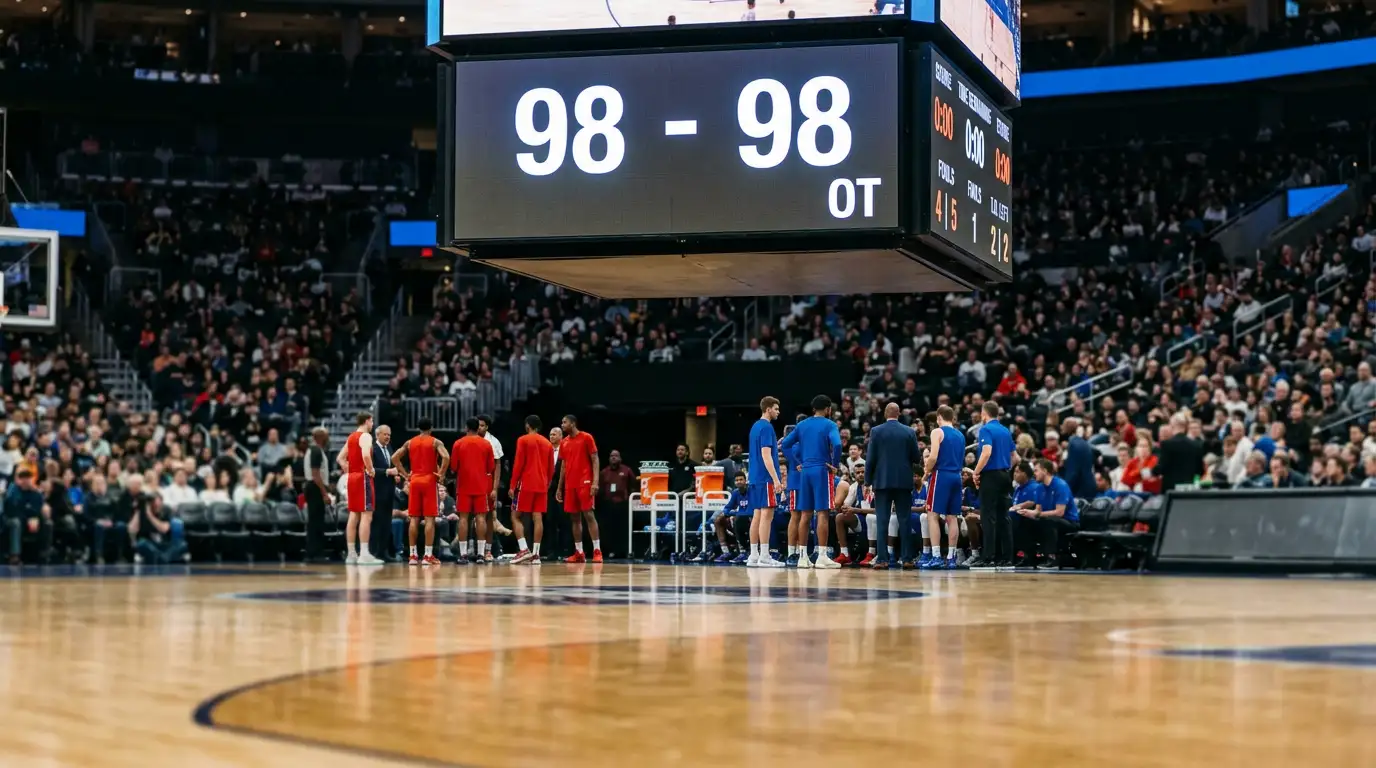
The five words were “includes overtime where applicable” – printed in the fine print at the bottom of a market I was betting in May 2019. I had backed the under on a Game 4 NBA Finals total, the game went to overtime, and the additional five minutes added eleven points to the total, pushing my bet from winner to loser by four points. I would have known to skip the bet, or to hedge it live during the third quarter, if I had read the settlement rules carefully before staking. I did not. The lesson cost me a unit, and the same lesson costs UK punters real money every season because the settlement conventions on basketball overtime are inconsistent across operators and across market types in ways that are not always obvious until the moment of settlement.
This piece walks through the actual settlement rules at UK-licensed operators for the markets most affected by overtime, the patterns where the rules diverge between books, and the strategic implications for punters who want to know what they are actually betting when they bet on a game that might run past regulation.
The summary up front: most basketball markets at UK operators settle on the final score including overtime, but not all do, and the exceptions matter. Quarter and half markets are the most affected category, with player prop markets a close second. Knowing which markets at your operator do and do not include overtime is the difference between confidently betting and discovering an unwelcome surprise at settlement.
The Full-Game Markets – Where the Convention Is Clear
For the headline full-game markets at UK-licensed operators, overtime is included by default. The spread, the moneyline, the total, the team totals, and the result markets all settle on the final score including any overtime period. This is the universal convention across the UK market and has been for many years. A bet on the over of a 230 total in a game that ends 124-118 after one overtime is a winner because the final score totals 242 – the regulation total would have been 230 or below, but overtime is included.
The implication for pre-match betting is that the line you see on a full-game market already implicitly accounts for the probability of overtime. The book’s model knows that some percentage of games – historically about 6 to 8 percent of NBA regular-season games – go to overtime, and the line reflects the expected total including that probability. If you are betting the under on a tight game with a low total, you are paying the implicit cost of the overtime probability whether you realise it or not. The bet does not “fail” because of overtime; the bet was always priced with overtime in the expected value calculation.
The mirror applies to the spread. A favourite covering a 6-point spread in a game that ends 110-105 in regulation has covered with margin. The same game going to overtime, with the favourite winning 118-112 in OT, still pushes the cover – but the route to the cover was unpredictable, and any live bets placed during the game may have settled differently. The pre-match spread covers; the live spreads are repriced for the overtime period as if it were a new mini-game.
Quarter and Half Markets – The Real Settlement Trap
Quarter and half markets are where the overtime convention gets complicated. The first-quarter and second-quarter markets are unambiguous – they settle at the end of regulation period, regardless of what happens later, because the period itself ends before overtime begins. The third-quarter and fourth-quarter markets are equally clear in mechanics but worth confirming at each operator.
The first-half market is also clear – it settles at the half-time buzzer, regardless of what happens in the second half or any overtime period. The second-half market is where the trap lives. At most UK operators, the second-half market includes overtime by default. The “second half” is functionally everything that happens after the half-time buzzer, which means a second-half spread or total is settled against the second-half score plus any overtime score.
The minority of UK operators settle the second-half market on second-half regulation only, treating overtime as a separate non-included period. This minority position is not always clearly disclosed on the bet slip, and the difference between the two conventions can swing the settlement of a bet by 10 to 20 points in a game that goes to overtime. The disciplined approach is to read the operator’s settlement rules for the second-half markets specifically before betting, and to choose operators whose conventions match your preference.
The full quarter and half betting framework covers the pre-match and live strategic implications of these settlement rules, including the specific live betting workflow that accounts for the overtime probability in the late stages of close games. The combination of clear understanding of settlement rules and disciplined live betting is what allows quarter and half markets to be a coherent product rather than a settlement minefield.
Player Props and Their Overtime Conventions
Player prop markets present another wrinkle. The headline counting-stat props – points, rebounds, assists, three-pointers, steals, blocks – generally include overtime at UK operators, meaning the prop settles against the player’s final statistical line including any overtime production. A player projected to score 25 points who scores 23 in regulation but adds 4 in overtime ends with 27 points, and the over on the points prop is a winner.
This inclusion has strategic implications. Players who play heavy minutes in overtime – typically stars whose teams need them on the floor – get a disproportionate boost from overtime games on their counting-stat props. Knowing which stars are likely to play full overtime minutes and which would typically be rested helps inform pre-match prop bets in games projected to be close.
The exceptions are quarter-specific player props, where the convention follows the quarter market: the prop settles at the end of the specified quarter regardless of overtime. A “Player X first-quarter points over 6.5” prop is unaffected by what happens in overtime, while a “Player X full-game points over 24.5” prop is fully affected. The distinction is mechanical and consistent across operators, but it is worth knowing before betting quarter-specific props in any game that might go to overtime.
The combined props – points plus rebounds, points plus assists, the triple-stack PRA – also include overtime at most UK operators. The overtime impact on combined props can be substantial because all three components benefit from the additional period of play, which means an overtime game pushes combined-stat overs more aggressively than it pushes single-stat overs.
Live Markets and the Overtime Reset
The live market treats overtime as a separate mini-game with its own pricing, repriced from scratch at the end of regulation. A live spread on the overtime period is offered as a 5-minute mini-game spread, typically with very wide overrounds and aggressive pricing reflecting the high variance per possession in such a short window. Live and in-play wagers represented approximately 47 percent of global online sports betting volume in 2024, and the overtime mini-market is one of the most exotic corners of that live ecosystem, with overrounds that can run 15 to 20 percent compared to the 4 to 7 percent on standard full-game lines.
The strategic implication is that betting overtime mini-markets is rarely a positive expected value activity for retail punters, because the overround is wide enough to consume any analytical edge a punter might have on the very short window. The exception is when the overtime mini-market is offered before the start of overtime – in the closing seconds of regulation – and one team has a clear roster or fatigue advantage going into the additional period. Even then, the wide overround means the edge has to be substantial to be profitable.
The live full-game markets also reprice when overtime starts. A live spread or total carried over into overtime is adjusted for the additional period, and live bets placed during regulation may settle on the regulation result if the bet was specifically scoped to regulation. The settlement scope of live bets varies more across operators than the settlement scope of pre-match bets, which means live betting in close games requires extra attention to the settlement rules at the specific operator being used.
Money Lines, Draws and the Three-Way Markets
The moneyline market at UK operators is universally a two-way settlement that includes overtime – the bet pays based on which team wins the game, including any overtime period. There is no NBA draw moneyline because the game continues until a winner is determined.
The wrinkle exists in the three-way markets that some operators offer for the regulation period only. A “regulation time” three-way market includes win-loss-draw outcomes based on the score at the end of the fourth quarter, ignoring overtime. These markets are uncommon at UK operators on NBA games but appear more frequently on European basketball, EuroLeague, and FIBA tournaments. Sportsbook hold rose from 6.7 percent in 2018 to 9.3 percent in 2024, and part of that increase has come from wider overrounds on niche markets like three-way regulation-time bets, which means the niche market carries materially worse pricing than the headline two-way equivalent.
Futures Markets and Overtime in Series Bets
Futures bets on series outcomes – championship, conference, series winner – are not directly affected by overtime since they settle on the underlying competitive outcome. A team winning a playoff series in overtime in Game 7 still wins the series, and the futures bet pays based on the series outcome rather than the regulation-time scores in individual games.
The exception is exact-result futures and series-margin futures. A bet on “Lakers to win the championship 4-0” pays based on the actual game-by-game results. If the Lakers win the series 4-0 but one of the wins required overtime, the bet still pays because the win counts regardless of the route to it. A bet on “exact series margin 4-1” pays based on the wins and losses, not the regulation-time outcomes of individual games. The futures market is generally unambiguous on these points, but it is worth checking specific operators’ rules for exotic exact-result markets that might define “win” differently from the league’s official definition.
The Pre-Match Checklist That Saves Money
The pre-bet checklist that catches most overtime-related surprises is short: confirm whether the market includes overtime by default at the specific operator, identify whether the bet you are placing is full-game or period-specific, and check the specific player whose prop you might be betting for likely overtime minutes in close games. The full check takes about thirty seconds and prevents the kind of unwelcome settlement surprise that no amount of analytical work would have anticipated.
The other useful habit is to track your settlement experience across operators over time. Different operators handle edge-cases differently, and the practical conventions can sometimes differ from the printed rules. After a season or two of disciplined record keeping, you will know which operators consistently settle overtime-related markets the way you expect, and which present occasional surprises. That knowledge informs which operators to prefer for close-game betting and which to avoid for markets where the settlement matters most.
Does the second-half basketball market always include overtime?
At most UK-licensed operators yes, the second-half market includes overtime by default. A minority of operators settle the second-half market on second-half regulation time only, treating overtime as a separate period. The convention is not always clearly disclosed in the bet slip, so reading the specific operator’s settlement rules before placing a second-half bet on a close game is the disciplined approach.
Are player props affected by overtime in basketball?
Headline full-game player props at UK operators include overtime by default, meaning the prop settles against the player’s full statistical line including any overtime production. Quarter-specific player props settle at the end of the relevant quarter and are unaffected by overtime. Combined props that aggregate multiple statistical categories also include overtime, which means an overtime game pushes the combined-stat overs more aggressively than single-stat overs.
Is betting the overtime period itself as a separate market profitable?
Generally no for retail punters. The live overtime mini-market is offered with wide overrounds – often 15 to 20 percent compared to 4 to 7 percent on standard markets – which consumes most analytical edges available on the short five-minute window. The exception is specific situations where a clear roster or fatigue advantage exists going into overtime and the overround can still be cleared by a confident edge.
Created by the ”Basketball Betting Explained” editorial team.