
Basketball Quarter & Half-Time Betting – Lines That Reset Mid-Game
 Available in US
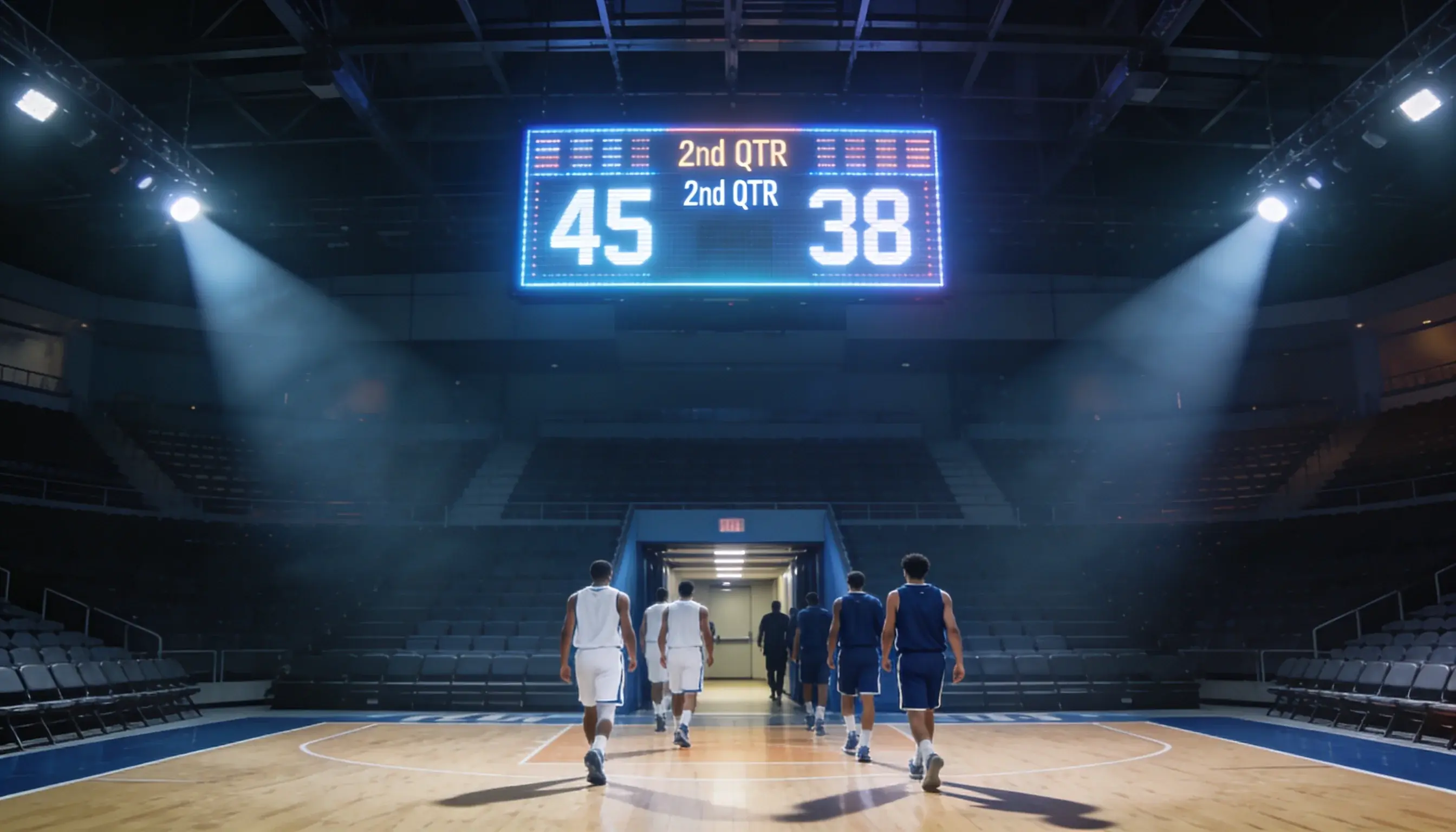
Quarter and half-time markets are my favourite undiscovered corner of basketball betting. They sit one click deeper into the lobby than the headline lines, the analytical depth that goes into pricing them is shallower than full-game markets, and the segmenting of the game into shorter windows produces predictable patterns that the lines do not always capture. I bet segment markets more often than I bet full-game totals, and I think most UK punters never look at them.
Here is the working guide on how the markets are structured, what the segments actually behave like, and where the value tends to sit when you compare segment lines against the full-game number you already know.
Quarter markets explained
Quarter markets let you bet on a specific 12-minute period of the game rather than the full 48 minutes. The standard NBA quarter markets at UK lobbies include first quarter spread, first quarter total, first quarter moneyline (less common), and the same trio for the second, third, and fourth quarters. The lines reflect each quarter’s expected points and margin, which is roughly a quarter of the full-game total and a quarter of the full-game spread – but not exactly.
The reason it is not exactly a quarter is that quarters do not score uniformly. First quarters tend to start slow as both teams settle into their offensive sets, then accelerate toward the end as bench units enter and rotations stretch. Second quarters are the highest-variance period in the typical NBA game because they feature the most bench-heavy lineups and the widest range of pace decisions. Third quarters often produce the largest run differentials because coaches have used halftime to adjust strategy. Fourth quarters tighten if the game is close and loosen if it is not, which makes them harder to model in advance than the earlier quarters.
The strategic angle that has paid me most over the years is the first quarter under in specific matchups. When two teams with strong defensive identities play each other and the public is hyped about the matchup, the first quarter total often gets shaded high – bettors expect fireworks early, but careful coaches with elite defences usually grind out a low-scoring first quarter as both teams probe the defence rather than attacking it. The total of around 55 points across the first 12 minutes can drift to 56 or 57 with public action, which is genuinely undervalued for the matchups in question.
The second quarter is the quarter I generally avoid. The bench-heavy lineups create variance that is hard to project, the pace can swing significantly depending on which side gets out on the break, and the public attention is low enough that the line is not consistently sharp. The variance cuts both ways – sometimes you find a genuinely soft line, sometimes you bet into a coin flip dressed up as a spread.
Half-time markets explained
Half-time markets are essentially aggregated quarter markets – the first half is quarters one and two combined, the second half is quarters three and four combined. The lines are usually tighter than individual quarter markets because the longer window absorbs some of the variance that makes quarters volatile.
The most useful angle at half time is the second-half line, which is published live at the half-time break. The line reflects what has happened in the first half plus what the algorithm projects for the second. The interesting opportunities come from cases where the first half pace was unusually high or unusually low, and the algorithm has overcorrected in projecting the second half. A first half that went into the break at 65-58 (a high total) often produces a second half total that the market shades higher than it should, because algorithms partly extrapolate the first-half pace into the second. The actual second half often reverts toward normal pace, especially if foul trouble or rotation considerations slow the game down.
The opposite pattern applies after low-scoring first halves. A 42-38 first half pushes the second half total down, but the second half often features looser defence as players have foul trouble and benches get stretched, producing a higher pace than the line implies. The under-the-radar trade is the over on second-half totals after low-scoring first halves, particularly when the foul-trouble situation suggests rotations will be unusual.
Half-time moneylines are rarely worth betting in isolation – the variance is high and the pricing is reasonably tight. Half-time spreads are useful when you have a specific tactical view (one team has made significant in-game adjustments, a key player has picked up foul trouble, a specific matchup that worked in the first half will continue in the second). Without that specificity, the spread is usually too close to the full-game line to produce value after vig.
Live versus pre-match quarter pricing
Quarter and half markets exist in both pre-match and in-play form, and they behave quite differently. Pre-match quarter markets are posted before the game starts and reflect the algorithm’s projection of each segment based on team styles, rest, and matchup factors. In-play quarter markets reprice continuously as the game progresses, with the current-quarter market being the most volatile and the upcoming-quarter markets being more stable.
Live/in-play wagers were 47% of global sports bets in 2024, and the share is climbing. The proportion of basketball betting that happens through live channels is even higher than the global average, partly because basketball’s quarter structure produces natural live-betting opportunities. Quarter markets are particularly well-suited to live betting because each quarter functions as a small game with its own pace, momentum, and tactical considerations.
The strategic difference between pre-match and live quarter betting is that pre-match betting rewards a strong projection model, while live betting rewards quick visual reads of what is actually happening on the floor. Both are valid edges, but they require different skill sets. The mistake I have seen punters make is treating live quarter markets like pre-match markets – they bet a third-quarter total because their model says it is too low, without accounting for the rotation patterns that have already emerged in the first half. The full live betting workflow covers the broader live-versus-pre-match decisions that apply to all in-play markets, including quarter and half segments.
The other live consideration is timing. Quarter markets close at the end of the previous quarter (the second-quarter market closes when the second quarter ends, for example), but live quarter markets within the current quarter close moments before the end of the period. The window for in-play action on a current quarter is roughly eleven minutes, and the algorithm reprices every possession. There is no “stale price” on a current quarter line for more than a few seconds at a time.
Settlement and overtime rules for quarter markets
The settlement rules on quarter and half markets are simpler than full-game markets in one specific respect: quarter and half lines never include overtime. A fourth-quarter total of 53.5 is graded based on the points scored in the fourth quarter only, regardless of whether the game extends to overtime. This is the standard rule across UK-licensed sportsbooks, and it is consistent enough that you can rely on it without checking each operator’s terms.
The implications matter for full-game versus segment betting strategy. A fourth-quarter under at 53.5 is a different bet from a full-game under at 220 in terms of overtime exposure. If you think the game will be close and might go to overtime, the full-game under takes additional risk from any extra periods. The fourth-quarter under captures the same end-of-game pace projection without that overtime exposure, which can make it the cleaner bet when overtime is a real possibility.
Some operators do offer “fourth quarter including overtime” markets as a distinct product, but they are clearly labelled and priced differently from the standard fourth quarter market. Read the market description before placing the bet, especially if you are betting on or against a close game. The pricing differential between “with OT” and “without OT” gives you a sense of how much overtime risk the market is pricing in – usually a few points of total and a few cents of moneyline.
Half-time settlement works the same way. First half markets settle at the half-time buzzer regardless of what happens later. Second half markets include any overtime by default at most UK operators, but a minority of operators settle “second half” as second half regulation only. Check the operator’s terms if you are betting a second-half total in a game with overtime potential. The rules are not standardised, and assuming they are has cost more punters more money than I can comfortably tally.
Quarter and half markets are the corner of basketball betting that most rewards the punter willing to specialise. The market depth is shallow relative to full-game lines, the analytical attention per market is lower, and the segment-specific dynamics of basketball produce repeatable patterns that the lines do not always capture cleanly. The volume is smaller than full-game betting and the variance per bet is higher, so the staking discipline matters even more than usual. But for a UK punter willing to study segments rather than just full games, the edges are still there.
Does overtime count toward a fourth-quarter total in NBA betting?
No – fourth-quarter markets at UK sportsbooks settle on fourth-quarter regulation points only, with any overtime excluded. The standard is consistent across UK-licensed operators. Some books do offer a separate fourth-quarter-including-overtime market, but it is labelled distinctly and priced differently from the standard fourth-quarter line.
Why are first-quarter totals more volatile than full-game totals?
Smaller samples produce larger relative variance, which mathematically makes any 12-minute window more variable than the same proportion of a 48-minute window. On top of that, first-quarter outcomes depend heavily on whether stars start hot or cold, which is a high-variance input that smooths out across a full game. The result is that quarter totals are noisier markets than full-game totals.
Written by the editors at Basketball Betting Explained.